
Top Picks, Features, and Smart Buying Guide
Blind spot monitoring is one of the most confidence inspiring safety technologies available on modern vehicles. On the right used car, it can help reduce sideswipe risks, improve lane change awareness, and make crowded highway driving feel far less stressful. This guide highlights the best used cars with blind spot monitoring, explains how the systems work, and outlines what to check before you buy. You will find model suggestions across sedans, SUVs, trucks, minivans, hybrids, and luxury vehicles, plus budget friendly ideas if you are shopping under a set price point. When you are ready to compare real vehicles, browse current options in our used-inventory and review recently sold examples in our sold-inventory to understand pricing and features in the market. Use the insights below to focus your search, verify the safety tech you want, and feel more confident on every test drive.
The right blind spot monitoring setup varies by brand and trim, so always confirm equipment on the specific vehicle. Look for indicator icons in the side mirrors, rear radar sensors behind the bumper, and menu settings that enable alerts. To plan ownership with clarity, explore payment-options, get a quick estimate with value-my-trade, and review helpful tips on how-to-finance-a-used-car.
Why Blind Spot Monitoring Matters On Used Cars
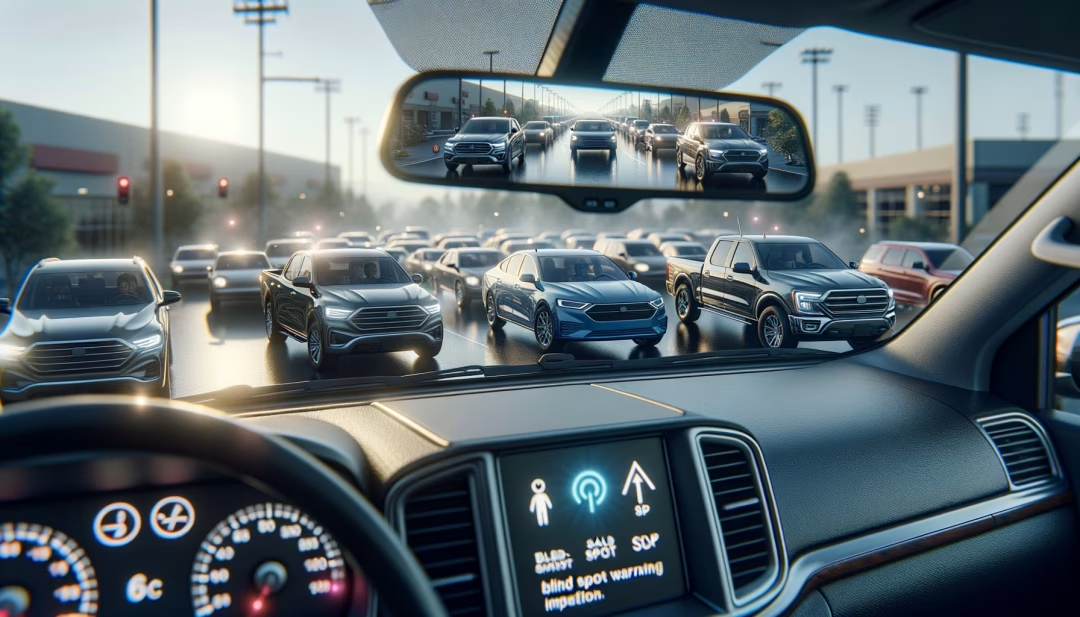
Blind spot monitoring, often shortened to BSM, uses rear corner radar or ultrasonic sensors to detect vehicles in adjacent lanes that may not be visible in your mirrors. When the system senses a vehicle in your blind zone, it typically illuminates a warning icon in the side mirror and can add an audible or steering wheel vibration alert if you signal a lane change. Many systems also pair with rear cross traffic alert to warn you of vehicles approaching from the sides while backing out of a parking space. For daily commuting, carpool duty, or long highway trips, BSM can reduce driver workload and deliver an extra layer of situational awareness.
How These Systems Work
Most BSM setups rely on radar modules mounted behind the rear bumper, angled to track fast moving objects in neighboring lanes. Software filters speed, angle, and distance to limit false alerts. Expect an amber light when a vehicle is present in your blind area and a flashing light with chirp if you activate the turn signal while a vehicle is detected. Some brands expand coverage with camera based solutions that display a live side view in the gauge cluster or center screen, often called Blind View Monitor or LaneWatch, which can be helpful in thicker traffic or tight city streets.
Best Used Sedans With Blind Spot Monitoring
If you want a comfortable commuter or family four door with BSM, these models are standouts for value and availability on the used market. Availability varies by year and trim, so confirm features on the exact vehicle.
- Toyota Camry: Broad availability of BSM on popular trims. See helpful comparisons at toyota-camry-vs-honda-accord-used.
- Honda Accord: Many trims include blind spot information system on later model years.
- Mazda6: Known for responsive driving, often includes BSM and rear cross traffic alert in driver assist packages.
- Hyundai Sonata and Kia Optima K5: Strong feature content per dollar, with BSM widely available.
- Nissan Altima: Later models frequently add BSM, especially on mid and upper trims.
Best Used SUVs and Crossovers With Blind Spot Monitoring
SUVs benefit greatly from BSM due to taller ride height and thicker rear pillars. Here are frequently recommended choices that balance price, features, and reliability.
- Toyota RAV4 and Highlander: Strong safety packaging with BSM common on popular trims. Explore segment guides like best-used-midsize-suvs and best-used-full-size-suvs.
- Honda CR V and Pilot: Later models bring BSM or Honda Sensing on many trims, ideal for families.
- Mazda CX 5 and CX 9: Well tuned driver assistance with crisp alerts and upscale cabins.
- Subaru Forester and Outback: Symmetrical AWD with commonly available BSM in higher trims, helpful for winter climates. See best-used-vehicles-for-winter-driving.
- Hyundai Santa Fe and Tucson, Kia Sorento and Sportage: Feature rich options with accessible pricing.
Best Used Trucks and Minivans With Blind Spot Monitoring
Large vehicles can have larger blind zones, making BSM particularly valuable when towing, hauling, or managing multiple passengers.
- Ford F 150 and Ram 1500: Many later models offer trailer aware BSM functions that extend coverage while towing. Explore best-used-vehicles-for-towing.
- Chevrolet Silverado 1500 and GMC Sierra 1500: Look for packages listing lane change alert with side blind zone alert.
- Toyota Sienna and Honda Odyssey: Family minivans often include BSM and rear cross traffic alert on popular trims.
Best Used Hybrids, EVs, and Luxury Cars With Blind Spot Monitoring
If you prefer electrified or premium choices, these models commonly bundle advanced assistance tech, including BSM, with upscale interiors and strong comfort features.
- Toyota Prius and RAV4 Hybrid: Efficient daily drivers with broad safety suite availability. See best-used-hybrid-cars.
- Nissan Leaf and Chevrolet Bolt EV: Check higher trims for robust safety packages. Explore best-used-electric-vehicles.
- Lexus ES, RX, NX and Acura TLX, RDX: Luxury comfort with well integrated BSM and additional driver aids. See best-used-luxury-cars and best-used-luxury-suvs.
Feature Names You May See
Brands often use unique names for their systems. While specifics vary, they generally deliver similar functionality. Confirm the exact feature list on each vehicle.
- Blind Spot Monitor, Blind Spot Information System, Side Blind Zone Alert
- Rear Cross Traffic Alert or Rear Cross Traffic Braking
- Lane Change Assist, Active Blind Spot Assist, Blind View Monitor
How To Verify Blind Spot Monitoring On A Test Drive
Always check that the exact vehicle has the system installed and functioning. Use these steps during an in person inspection.
- Look for icons etched or embedded in both side mirrors. Many illuminate when starting the car as a bulb check.
- Open the driver assistance or safety settings menu to confirm BSM and rear cross traffic alert toggles are present and enabled.
- During a safe test drive on a multi lane road, let a vehicle pass you on either side and watch for the icon to illuminate. Use caution and obey traffic laws.
- Inspect rear bumper corners for radar modules. If the bumper was repaired, ask for documentation to ensure the sensors are aligned and calibrated.
Budget Friendly Picks With BSM
Prices vary by mileage, trim, and regional demand. As a general guide, you may find BSM equipped options in these price ranges depending on year and features. Use the resources below to refine your search by budget.
- Under 10000: Older compact sedans and crossovers with optional packages. Explore best-used-cars-under-10000.
- Under 15000: More mainstream sedans and compact SUVs with BSM on mid trims. See best-used-cars-under-15000 and best-used-suvs-under-15000.
- Under 20000: Newer midsize sedans and popular crossovers with fuller safety suites. Browse best-used-cars-under-20000 and best-used-suvs-under-20000.
Safety and Reliability Considerations
While BSM adds value, the overall safety picture includes crash test performance, braking, tires, visibility, and maintenance history. Review ratings on models you are considering and confirm any open recalls have been addressed. A pre purchase inspection can verify sensor mounting, bumper repair quality, and software version. To broaden your research, visit used-cars-with-best-safety-ratings, safest-used-cars, and used-vehicles-with-lowest-recall-rates.
Ownership Costs, Insurance, and Resale
Driver assistance features like BSM can support strong resale value because many buyers prefer modern safety tech. Insurance effects vary by carrier, but vehicles with advanced safety can sometimes qualify for favorable rates. Keep good service records and document any calibration after body work, windshield replacement if applicable, or bumper repair. For long term value insights, see used-cars-with-best-resale-value and used-cars-with-lowest-cost-of-ownership.
Financing and Trade In Resources
If you are budgeting for a BSM equipped model, reviewing financing options and trade in value can help you narrow trims and years quickly. Explore applications, compare payment-options, and estimate your vehicle value at value-my-trade. For deeper guidance, visit how-to-finance-a-used-car, used-car-loan-interest-rates, and used-car-buying-checklist.
Related Research and Shopping Tools
- Inventory and pricing insights: used-inventory, sold-inventory, used-car-price-trends, used-car-market-trends
- Safety and reliability research: most-reliable-used-cars, used-cars-with-best-crash-test-ratings
- Feature focused pages: best-used-cars-with-backup-camera, best-used-cars-with-apple-carplay, best-used-cars-with-adaptive-cruise-control
- Buying help: how-to-buy-a-used-car, used-car-inspection-checklist, what-to-look-for-when-buying-a-used-car
Pro Tips For Comparing BSM Equipped Vehicles
When two vehicles appear similar on paper, look deeper at how their safety tech is implemented. Some systems have louder or softer chimes, different icon brightness, or broader detection angles. If you regularly drive at night, check icon visibility and glare. If you spend time in heavy traffic, consider a model that offers both BSM and a camera based side view or a lane change assist that escalates warnings when you signal into an occupied lane. Finally, consider pairing BSM with adaptive cruise control and lane keeping features if you take frequent highway trips. The combined suite lowers workload and can make longer drives more relaxed.
Frequently Asked Questions
About This Guide and Next Steps
This resource is designed to help you quickly identify strong used vehicles with blind spot monitoring, understand how the systems function, and verify features on a specific car. For additional information about our team, visit about-us and meet-our-staff. You can also browse recent news and tips on blog or reach out through contact-us. For policies and visitor information, see privacy-policy, terms, and visitor-agreement.
Office Hours
Monday
Tuesday
Wednesday
Thursday
Friday
Saturday
9:00 am - 5:00 pm
9:00 am - 5:00 pm
9:00 am - 5:00 pm
9:00 am - 5:00 pm
9:00 am - 5:00 pm
Closed
