
Guide: Ratings, Tips, and Top Picks
If you plan to pull a boat, camper, or utility trailer, choosing the best used SUVs for towing starts with the right tow rating, payload, and cooling hardware. This page explains what numbers matter, how to compare SUVs, and which models have the strongest reputation when properly equipped. You will find quick towing definitions, inspection tips for shopping pre-owned, and real world capacity ranges for popular midsize, full size, and luxury SUVs. We also include helpful links to related resources, so you can explore inventory, check trade values, and research trims and tow packages. Whether your goal is a 2,500 pound pop up, a 5,000 pound family camper, or a larger trailer, this guide will help you match your trailer weight to an SUV that tows with confidence, stability, and safety. Always confirm the exact tow rating for the VIN and configuration you are considering.
Towing confidence comes from more than horsepower. Wheelbase, payload for tongue weight, axle ratios, cooling upgrades, and trailer brakes all play a role in control and durability. Below, compare top used SUVs by class, learn how to verify tow ratings, and review pre tow maintenance steps to protect your engine, transmission, and brakes on every trip.
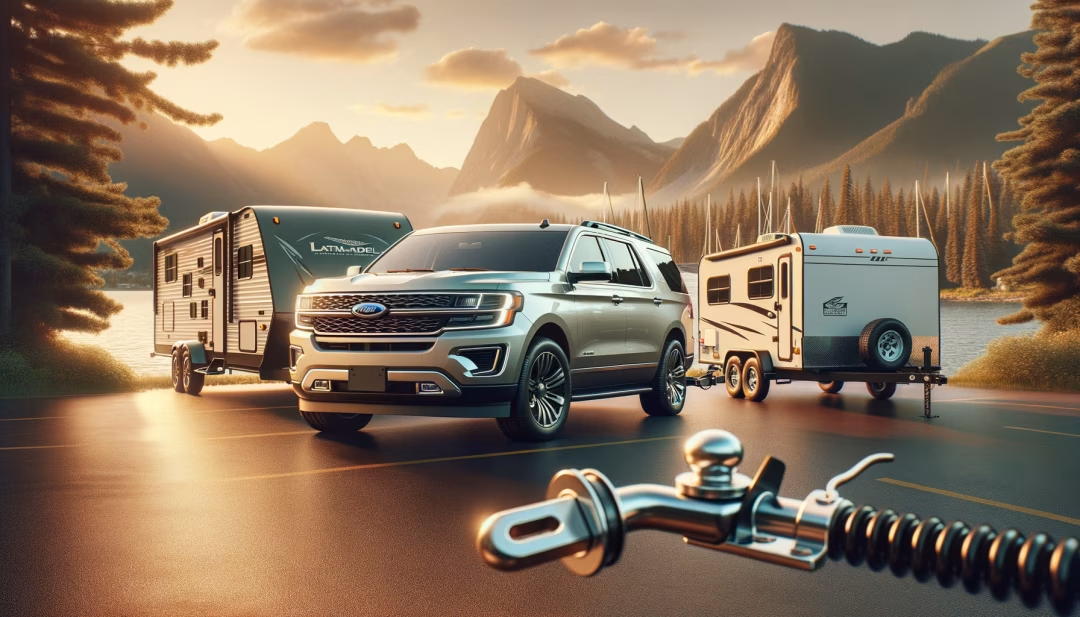
How to pick the right used SUV for towing
Before looking at brand names, focus on the numbers and hardware. The most important ratings are Gross Vehicle Weight Rating, Gross Combined Weight Rating, payload, and the manufacturer tow rating for the exact engine, drivetrain, axle ratio, and tow package. For stable towing, aim for tongue weight that is 10 to 15 percent of your loaded trailer weight and confirm your SUV’s payload can handle that tongue weight plus people, pets, and cargo. Longer wheelbases add stability, while factory tow packages improve cooling, wiring, hitch strength, and sometimes gearing.
- Match the trailer’s loaded weight to a verified tow rating for the specific VIN
- Confirm payload covers tongue weight plus passengers and cargo
- Prefer factory tow packages with upgraded cooling and wiring
- Use a weight distributing hitch with sway control when appropriate
- If towing near the limit, consider a class up for more margin
Top used SUVs for towing by category
Below are commonly cited capacity ranges for popular used SUVs when properly equipped. Always verify the tow rating, axle ratio, and tow package for the exact model year and trim.
Full size body on frame SUVs for heavy trailers
These are built on truck style frames for maximum strength, longer wheelbases, and higher payload. They are often the best choice for trailers above 6,000 pounds.
- Ford Expedition: up to around 9,300 pounds when properly equipped
- Chevrolet Tahoe and GMC Yukon: up to around 8,400 pounds when properly equipped
- Nissan Armada: up to around 8,500 pounds when properly equipped
- Toyota Sequoia: commonly in the 7,000 to 7,400 pound range depending on year and equipment
Midsize SUVs for campers and boats
Midsize SUVs balance towing strength with maneuverability and family comfort. Many comfortably handle 3,500 to 6,000 pounds, with a few standouts above that when properly equipped.
- Dodge Durango: up to around 8,700 pounds with V8 and tow package
- Jeep Grand Cherokee: up to around 7,200 pounds with V8, lower with V6
- Ford Explorer: up to around 5,600 pounds depending on engine and package
- Toyota 4Runner: around 5,000 pounds with proper setup
- Nissan Pathfinder: up to around 6,000 pounds when properly equipped
- Honda Pilot, Kia Telluride, Hyundai Palisade, VW Atlas, Subaru Ascent: commonly up to around 5,000 pounds with tow packages
- Chevrolet Traverse: up to around 5,000 pounds when properly equipped
Luxury SUVs with higher tow ratings
Luxury options can pair strong tow ratings with refined cabins. Maintenance histories matter more here due to complex systems.
- Audi Q7: up to around 7,700 pounds when properly equipped
- Mercedes Benz GLE: up to around 7,700 pounds when properly equipped
- BMW X5: up to around 7,200 pounds depending on engine and package
- Land Rover Discovery: often rated near 8,200 pounds, verify service history
Compact SUVs for light duty towing
Compact models are best for light trailers, small boats, and utility loads. Many range from 1,500 to 3,500 pounds when properly equipped.
- Toyota RAV4: up to around 3,500 pounds on select trims with tow package
- Ford Escape: up to around 3,500 pounds on properly equipped turbo models
- Subaru Forester: around 1,500 pounds for most years
Towing terms made simple
Curb weight is the SUV’s weight without passengers or cargo. GVWR is the maximum allowed weight of the SUV with people and cargo. GCWR is the combined maximum weight of the SUV and loaded trailer. Payload is how much weight you can add to the SUV, including tongue weight, people, and gear. Tongue weight is the downward force on the hitch and should be around 10 to 15 percent of the loaded trailer for conventional towing. Hitch classes matter too. Class III supports up to 6,000 pounds for many setups, while Class IV goes higher. Trailer brakes are recommended and often required by state law above set thresholds. If you are towing near the upper limit, a weight distributing hitch with sway control can improve stability.
What to look for on a used SUV that will tow
A strong tow vehicle is more than the right engine. Seek factory tow packages that include an integrated hitch, 7 pin wiring, a higher capacity alternator, upgraded transmission and engine cooling, and a higher axle ratio. Inspect service records for regular fluid changes and pay attention to brakes, tires, suspension, and any prior towing usage. If possible, verify axle ratio codes, hitch class, wiring functionality, and that the trailer brake controller works correctly.
- Transmission service up to date, no slipping or delayed shifts under load
- Cooling system pressure tested, no leaks, fans and thermostats verified
- Brakes with healthy pads and rotors, no vibration under firm stops
- Tires with high load ratings and recent date codes, even wear patterns
- Suspension bushings, shocks, and rear springs in good condition
AWD vs 4WD vs RWD for towing
Rear wheel drive is common for maximum tow ratings on full size models. All wheel drive improves traction in rain and light snow but may slightly reduce tow ratings on some trims. Part time 4WD with low range helps when launching a boat on slippery ramps or pulling a trailer up a steep campsite. Always check the rating for your chosen drivetrain and consider tire selection for your climate.
Fuel economy and ownership costs
Heavier trailers demand stronger engines and gearing that can lower fuel economy. If you tow only a few weekends per year and drive daily without a trailer, a midsize SUV with a 5,000 pound rating may offer the best balance. If you tow frequently or in mountains, a full size SUV can pay back in cooler temperatures, fewer downshifts, and better control. For everyday efficiency research models on used-suvs-with-best-fuel-economy and used-suvs-with-best-mpg, then cross check their tow packages and ratings.
Popular towing scenarios and model ideas
For a small fiberglass boat or jet skis around 2,000 to 3,000 pounds loaded, many compact and midsize SUVs rated at 3,500 pounds work well. For a family travel trailer at 4,000 to 6,000 pounds loaded, look at midsize SUVs like 4Runner, Pilot, Pathfinder, Explorer, Telluride, Palisade, or Ascent with tow packages. For heavier dual axle campers and larger boats above 6,000 pounds, consider full size SUVs like Expedition, Tahoe, Yukon, Sequoia, or Armada for extra capacity and longer wheelbases. If your trailer is over 8,000 pounds loaded, verify vehicle and hitch class carefully and consider full size body on frame models with the highest ratings.
Inventory research tips
When browsing inventory pages, use filters for drivetrain, engine size, and features. In the vehicle description or photos, look for 7 pin connectors, integrated brake controller buttons, tow haul mode, transmission coolers, and hitch receiver photos. Ask for the window sticker or build sheet to confirm the factory tow package. If possible, verify axle ratio and GCWR from the owner’s manual or a VIN specific resource.
- Confirm the trailer wiring works with lights and brake signals
- Check for signs of heavy towing like aftermarket brake controllers or rear suspension helpers
- Review tire load ratings and age to ensure safe towing capacity
Maintenance steps before the first tow
Fresh fluids and strong cooling systems protect your powertrain under load. Before a long tow, change engine oil if close to due, verify coolant concentration, inspect belts and hoses, flush brake fluid if it is old, and service the transmission and differentials per the severe duty schedule. Torque the hitch hardware and lug nuts, set tire pressures to the recommended towing values, and test brake controller gain at low speed in a safe area.
- Load the trailer evenly and target 10 to 15 percent tongue weight
- Secure cargo with rated straps and re check after a few miles
- Practice wide turns and longer stopping distances
Useful related resources
Explore more topics and research tools below. These links open pages within this site.
SUVs vs trucks for towing
Full size pickup trucks usually offer higher tow ratings and payload than SUVs, especially for fifth wheel and gooseneck trailers. SUVs provide enclosed cargo space and additional seating for families. If your trailer approaches 8,000 pounds or more, evaluate both full size SUVs and trucks on best-used-vehicles-for-towing and best-used-trucks-with-best-towing-capacity, then decide which layout fits your daily use and storage needs.
How we evaluate the best used SUVs for towing
We assess published tow ratings, stability factors like wheelbase and suspension tuning, availability of factory tow packages, reliability records, maintenance costs, and owner satisfaction. We also consider visibility, braking performance, and the availability of driver assistance features that help with trailer awareness, such as blind spot monitoring with trailer coverage and surround view cameras. Finally, we check for strong resale value and parts availability to reduce long term costs.
Frequently Asked Questions
Disclaimer: Tow ratings and equipment vary by year, trim, engine, axle ratio, drivetrain, and installed tow packages. Always verify the rating for the exact vehicle and do not exceed GVWR, GCWR, or hitch limits. Follow all state laws regarding trailer brakes and lighting.
More policy and information pages
Office Hours
Monday
Tuesday
Wednesday
Thursday
Friday
Saturday
9:00 am - 5:00 pm
9:00 am - 5:00 pm
9:00 am - 5:00 pm
9:00 am - 5:00 pm
9:00 am - 5:00 pm
Closed
