
Picks, Tow Ratings, Payload Tips, and Buyer Guide
If you plan to tow a camper, the right used truck can make every mile safer, easier, and more enjoyable. This guide highlights the best used trucks for towing campers, with practical advice on tow ratings, payload, engine choices, and features that matter. Whether you pull a lightweight pop-up, a family travel trailer, or a heavier fifth wheel, we outline proven half-ton, three-quarter-ton, and one-ton options that balance capability, reliability, and value. You will also find towing setup tips and inspection pointers tailored to used trucks, so you can match the right vehicle to your camper and your budget. For current availability, specification details, and tools that help you plan ownership, explore resources throughout our site including inventory, financing, trade valuation, and research content. Use this page to narrow your shortlist and confidently select a tow-ready truck that fits your camping adventures.
Great towing starts with honest numbers. Verify a trucks Gross Vehicle Weight Rating, Gross Combined Weight Rating, axle ratio, and payload on the door jamb sticker, then match it to your campers realistic loaded weight. Look for a factory tow package, an integrated trailer brake controller, cooling upgrades, and the right hitch setup. The recommendations and tips below are designed to simplify that match, cut guesswork, and help you find the best used truck for towing your camper safely and smoothly.
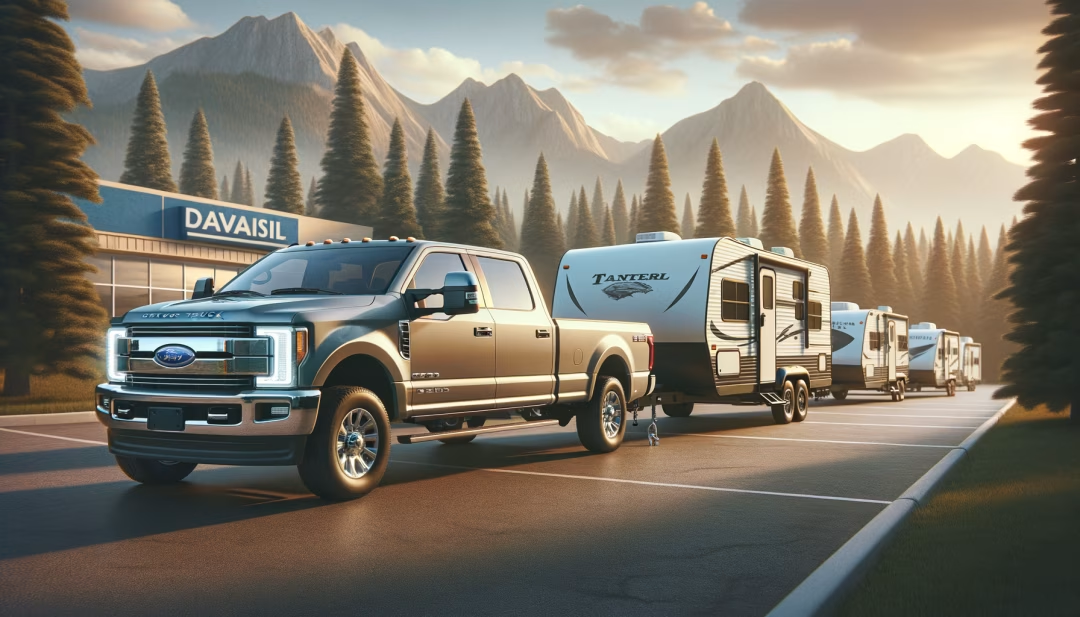
What Makes a Used Truck Great for Towing Campers
Towing campers demands more than a big number on a brochure. The best used trucks for towing blend strong torque, sufficient payload, stable chassis dynamics, and the correct tow equipment. Engines with broad torque curves such as V8 gas, turbocharged V6, or modern diesels deliver confidence on grades. Longer wheelbase trucks track better at highway speeds, and axle ratios like 3.73 or 4.10 improve low-speed control and hill pull. A factory tow package typically adds a hitch receiver, 7-pin wiring, larger cooling, and often an integrated trailer brake controller. Stability features such as trailer sway control and tow/haul transmission programming further improve control when crosswinds or mountain passes appear.
- Key specs to confirm: tow rating, payload, GVWR, GCWR, axle ratio, and wheelbase
- Essential equipment: hitch receiver or fifth wheel rails, 7-pin connector, brake controller, tow mirrors
- Preferred features: transmission cooler, heavy-duty cooling, integrated trailer sway control, rear camera
Match the Truck to Your Camper
Different camper categories require different capabilities. Approximate fully loaded weights vary by floorplan and options, so confirm the actual loaded weight of your own camper. Conventional travel trailers often require 10 to 15 percent tongue weight on the hitch, while fifth wheels and goosenecks typically apply 15 to 25 percent pin weight on the truck. That weight counts against your trucks payload along with passengers, fuel, and gear.
- Pop-up and teardrop trailers: about 1,000 to 3,500 pounds loaded - midsize or half-ton trucks often work well
- Small to midsize travel trailers: about 3,500 to 7,500 pounds - stronger half-ton trucks recommended
- Larger travel trailers and toy haulers: about 7,500 to 10,000 plus pounds - max-tow half-ton or three-quarter-ton
- Fifth wheels: about 9,000 to 16,000 plus pounds - three-quarter-ton or one-ton recommended
Quick example: a 7,000 pound travel trailer at 12 percent tongue weight puts about 840 pounds on the hitch. Add 500 pounds for passengers and gear and you are already at 1,340 pounds of payload, before hitch hardware. Many half-ton trims can handle that, but you must check the payload sticker to be sure.
Top Used Half-Ton Trucks for Towing Campers
Half-ton pickups remain the most popular choice for travel trailers because they blend daily usability with strong tow ratings when properly configured. Focus on trucks with a factory tow package, higher payload trims, and the right engine and axle combo.
- Ford F-150 2015 to 2020: 5.0 V8 or 3.5 EcoBoost with Max Tow can tow up to the mid 12,000s when equipped; look for integrated brake controller and trailer backup assist on certain trims
- Chevrolet Silverado 1500 2014 to 2019 and GMC Sierra 1500: 5.3 or 6.2 with Max Trailering Package raises ratings and adds cooling and gearing for confidence under load
- Ram 1500 2013 to 2018 plus 2019 classic: 5.7 Hemi with 8 speed transmission and 3.92 axle ratio is a sweet spot for mid to heavy travel trailers
- Toyota Tundra 2014 to 2021: 5.7 V8 and tow package are proven for reliability and straightforward towing up to the low 10,000s when properly equipped
Trims with big wheels and luxury options often weigh more, which reduces payload and can limit tongue weight headroom. If you will tow often, prioritize payload, axle ratio, and cooling over cosmetic extras.
Best Used Heavy-Duty Trucks for Larger Campers
For fifth wheels, larger toy haulers, or travel trailers near five digits, a three-quarter-ton or one-ton truck is usually the safer, easier choice. These trucks offer stiffer frames, bigger brakes, stronger axles, higher payload ratings, and diesel or big gas engines that stay cool and composed when grades get long.
- Ford F-250 and F-350 2017 to 2019: 6.7 Power Stroke diesel delivers immense torque and stability; gas 6.2 is a budget friendly alternative for moderate weights
- Chevrolet Silverado 2500HD and 3500HD 2015 to 2019 and GMC equivalents: Duramax diesel with Allison transmission is a towing favorite; gas 6.0 is simple and dependable
- Ram 2500 and 3500 2014 to 2018: 6.7 Cummins is renowned for low rpm torque; 6.4 Hemi gas is effective for lighter fifth wheels and big travel trailers
Diesels excel at heavy towing thanks to torque and engine braking, but they cost more to buy and maintain. Gas engines can be more budget friendly if your camper and terrain are moderate.
Capable Midsize Options for Light Campers
Lightweight pop-ups and compact travel trailers can pair nicely with certain midsize trucks, especially when they have a tow package and a realistic tongue weight plan.
- Toyota Tacoma V6 2016 to 2021: up to 6,400 pounds depending on trim and axle ratio; ideal for small trailers and pop-ups
- Chevrolet Colorado and GMC Canyon 2015 to 2020: 2.8 Duramax diesel offers excellent torque and stability for its size; gas V6 also tows well when properly equipped
- Ford Ranger 2019 to 2022: turbo 2.3 with tow package is capable up to around 7,500 pounds with confident midrange pull
Used Truck Towing Features to Prioritize
When comparing candidates, the right options can be as important as the engine itself. Trucks with factory tow or max-tow packages typically include higher capacity hitches, 7 pin wiring, upgraded cooling, and sometimes axle ratio changes that improve performance at low speeds and on grades. An integrated trailer brake controller, extendable tow mirrors, and trailer sway control are high value features for safety and comfort.
- Factory tow package with heavy duty cooling and correct hitch class
- Integrated trailer brake controller and 7 pin wiring
- Axle ratio suited for towing, such as 3.73 or 4.10, depending on engine and tire size
- Tow/haul mode, transmission cooler, and trailer stability assist
- Backup cameras with hitch guidance and optional trailer cameras
Used Truck Inspection Tips for Towing Duty
A thorough inspection helps ensure your used truck is ready for the stress of towing. Look for signs of previous heavy towing such as worn hitches or aftermarket tuning, and review maintenance records for fluids and cooling system work. Pay close attention to brakes, suspension bushings, shocks, and tires with proper load ratings. Check the rear differential and transmission for leaks and service documentation.
- Frame and underbody for rust, especially near hitch mounts and spring perches
- Transmission fluid condition and service intervals, preferably documented
- Differential fluid condition and gear noise under load during a road test
- Brake pad thickness, rotor condition, and evidence of overheating
- Tire age codes and load ratings that meet or exceed the trucks GVWR
Diesel vs Gas for Camper Towing
Diesel trucks excel at long-distance, heavy towing due to high torque at low rpm and strong engine braking. They can tow more with less downshifting and often deliver better fuel economy under load. However, they cost more to purchase and maintain, and modern emissions systems add complexity. Gas trucks are simpler, often cheaper to maintain, and perfectly capable for many travel trailers and modest fifth wheels, especially when equipped with the right axle ratio and cooling. Choose based on your campers weight, how often you tow, and your budget for maintenance.
Weight Ratings and Safe Setup
Always verify numbers on the trucks door jamb and in the owners manual. Keep actual trailer weight within the trucks rated towing capacity and keep tongue or pin weight within payload. Weight distribution hitches can help with conventional trailers by transferring weight to the front axle, improving stability and braking. Properly sized brake controllers, correctly adjusted trailer brakes, and level towing geometry contribute to safe, predictable handling in crosswinds and during panic stops.
Explore Models, Pricing, and Ownership Resources
Compare real vehicles, review photos and specs, and see recent arrivals on the used inventory page. Research reliability and capability trends on topic pages like best-used-trucks and best-used-vehicles-for-towing, then estimate monthly costs on payment-options. If you plan to replace a current vehicle, value-my-trade offers an estimate to inform your budget. For ongoing maintenance suited to towing, schedule-service provides helpful information.
More Helpful Links
Related Buying Guides
Frequently Asked Questions
For more research and shopping tools across vehicle types and budgets, explore pages like best-used-suvs, best-used-luxury-suvs, best-used-electric-vehicles, used-cars-with-best-resale-value, and used-cars-with-high-mpg. Site information including policies and updates is available on privacy-policy, terms, and visitor-agreement. When you are ready to compare more options or learn about team expertise, meet-our-staff and about-us provide helpful background, while blog highlights current insights for shoppers.
Office Hours
Monday
Tuesday
Wednesday
Thursday
Friday
Saturday
9:00 am - 5:00 pm
9:00 am - 5:00 pm
9:00 am - 5:00 pm
9:00 am - 5:00 pm
9:00 am - 5:00 pm
Closed
