
Top Picks, Inspection Tips, and Ownership Insights
If a dependable powertrain matters most, this guide to used cars known for engine reliability will help you make a confident choice. We outline the engines and models that consistently deliver long service life with minimal surprises, plus smart ways to verify that a specific vehicle still has many miles to go. From bulletproof four cylinder commuters to proven V6 workhorses, you will find examples across sedans, SUVs, and trucks that balance longevity, efficiency, and value. We also explain how maintenance records, fluids, and simple checks can reveal more about engine health than a window sticker ever will. When you are ready to explore options, you can review inventory on used-inventory, compare research like most-reliable-used-cars, or schedule a hands on evaluation on schedule-service with confidence.
Engine reliability is a combination of robust design, proper maintenance, and how the last owner treated the vehicle. In the sections below, you will find proven engines by segment, year notes to consider, and an inspection checklist that you can use during a test drive. You can also reference used-car-buying-checklist, used-car-inspection-checklist, and how-to-check-used-car-history for deeper preparation.
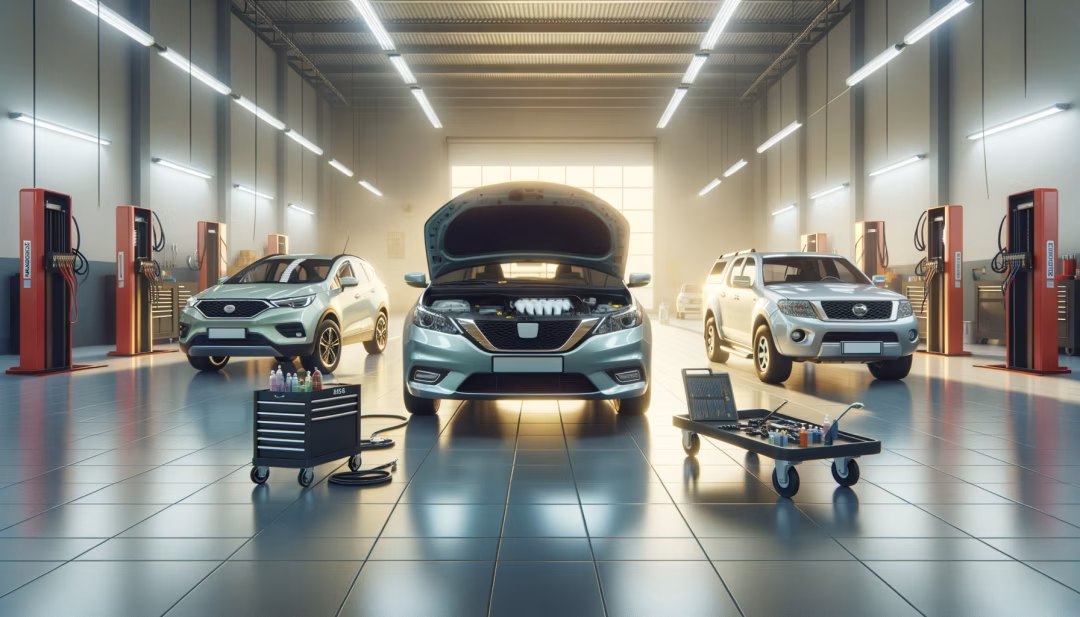
What engine reliability means in a used car
Reliable engines start easily, run smoothly, tolerate everyday abuse, and keep their internals healthy for well over 150,000 miles with routine maintenance. Designs that earn a strong reputation usually have conservative tuning, sturdy timing systems, well managed cooling, and ready access to affordable parts. In practice, reliability shows up as a quiet idle, consistent oil level, clean service history, and the absence of leaks, overheating, or warning lights.
- Proven engine families with multiyear production and high owner satisfaction on used-cars-with-highest-owner-satisfaction
- Predictable maintenance with low parts cost shown on used-cars-with-lowest-repair-costs and used-cars-with-lowest-maintenance-costs
- Minimal pattern failures or recall history, supported by used-vehicles-with-lowest-recall-rates
- Solid cold starts, stable operating temperature, and clean emissions monitors
Engines and models consistently praised for long life
Below are widely respected engines and the used models that carry them. Actual condition matters most, so use these as starting points and confirm with a thorough inspection and test drive. For price focused comparisons, explore best-used-cars-under-10000, most-reliable-used-cars-under-15000, or best-used-cars-under-20000.
Compact and midsize sedans
Compact and midsize sedans are a sweet spot for durable, efficient engines. Many non turbo four cylinders use simple port injection and chain driven timing, a proven recipe for longevity when serviced on time.
- Toyota style 1.8L and 2.5L four cylinders in models similar to Corolla and Camry are known for clean idle, low oil consumption when maintained, and long timing chain life. See best-used-sedans and used-cars-with-longest-engine-life for more detail.
- Honda style 1.8L and 2.4L i VTEC engines in Civic and Accord analogs deliver smooth power with strong wear resistance when oil changes are consistent. Research best-used-cars-for-commuters and used-cars-with-high-mpg to match efficiency goals.
- Mazda style Skyactiv G 2.0L and 2.5L engines in Mazda3 and Mazda6 equivalents pair high compression with careful thermal management and have an excellent long term record when serviced on schedule.
Small and midsize SUVs
Crossovers that share sedan engines often inherit the same strengths. Look for models that avoid chronic turbo or carbon buildup concerns, and focus on those with thorough service documentation.
- Toyota style 2.5L fours in RAV4 like vehicles prove durable in mixed city and highway use. Many achieve high mileage with routine fluid service. See best-used-compact-suvs and best-used-midsize-suvs for segment guidance.
- Honda style 2.4L and 1.5T in CR V like models show very good longevity when oil changes follow schedule and coolant service is documented. Review used-cars-with-best-resale-value to understand retention trends.
- Subaru style 2.5L naturally aspirated fours in Forester and Outback like vehicles are valued for balanced traction. Confirm head gasket service on older years and cooling system integrity. See best-used-vehicles-for-winter-driving and used-cars-for-snow if traction matters.
Body on frame SUVs and trucks
If you need towing or tougher duty cycles, proven V6 and V8 engines can deliver long service life with correct fluids and cooling. These powertrains thrive on timely maintenance and moderate loads.
- Toyota style 4.0L V6 and 5.7L V8 in 4Runner and Tundra analogs are known for robust timing chains and durable internals. Pair with best-used-vehicles-for-towing or best-used-trucks-for-work depending on needs.
- Ford style 5.0L V8 and carefully maintained EcoBoost V6 in F 150 like trucks offer strong reliability when oil and spark intervals are followed and quality fuel is used. See best-used-ford-f150-years for year guidance.
- GM style 5.3L and 6.2L small block V8 engines in Silverado and Sierra equivalents are well supported with parts and service knowledge. Explore best-used-trucks-under-20000 for value picks.
Luxury models with stout engines
Luxury vehicles can deliver both refinement and reliability when you choose the right engines. Focus on models with naturally aspirated V6 or conservative turbo tuning, then verify maintenance depth.
- Lexus style 3.5L V6 in ES and RX like models has a long term reputation for quiet operation and low failure rates. Review best-used-luxury-cars and best-used-luxury-suvs for trim guidance and ownership cost context.
- Acura style 3.5L V6 in TLX and MDX equivalents can provide many miles with documented timing belt or chain service and transmission fluid changes.
Hybrid and electric considerations
Hybrids rely on an efficient gas engine plus electric assistance. Many hybrid engines run at steady loads that reduce wear. Confirm battery health, cooling fans, and software updates. For more, visit best-used-hybrid-cars, best-used-electric-vehicles, or used-vehicles-with-best-warranty-coverage for coverage insights.
Maintenance history matters more than the badge
Two identical cars can have very different futures based on their maintenance and operating habits. A well kept vehicle with 120,000 miles can be a better bet than a neglected one with half the mileage. Look for specific proofs rather than assumptions.
- Service records that show oil changes at the correct interval using the right viscosity and specification. Synthetic oil on time is a strong signal of care.
- Cooling system service, including fresh coolant, radiator condition, and a steady temperature gauge in traffic and on the highway.
- No leaks around valve covers, oil pan, front and rear main seals, or water pump. A clean underbody is encouraging, but verify that no recent cleaning is hiding fresh fluid.
- Stable idle and smooth acceleration without hesitation or misfire. Confirm during a fully warmed test drive.
How we evaluate engine health before a vehicle reaches the lot
A careful intake process helps identify the strongest candidates for long term ownership. Our inspection emphasizes engine condition because it drives both satisfaction and total cost of ownership found on used-cars-with-lowest-cost-of-ownership. While processes evolve, the core checks below remain consistent.
- Cold start assessment for timing noise, smoke, and idle quality. We scan for misfire counts and pending diagnostic codes.
- Visual inspection for leaks, gasket health, belt condition, and cooling system integrity. Where appropriate we perform a block test for combustion gases in coolant.
- Road test under varied loads to verify temperature stability, power delivery, and noise levels. We also review live data like fuel trims and knock correction.
- Service review to validate oil type, intervals, and major maintenance like spark plugs, valve adjustments where applicable, and timing component service.
If you want an independent look at a vehicle you already own or are considering, see schedule-service, used-car-inspection-checklist, and how-to-check-used-car-history for step by step guidance.
Smart shopping checklist for engine reliability
Use these steps to reduce risk and maximize confidence when you shop for a reliable engine. Each step builds on the last and helps you separate well kept vehicles from those that may require immediate attention.
- Research model specific patterns on most-reliable-used-cars, used-cars-with-longest-engine-life, and used-cars-with-lowest-repair-costs before visiting a vehicle in person.
- Request maintenance documentation. Look for multi year consistency, not just a single recent service. Confirm oil spec and interval alignment with the manual.
- Perform a cold start if possible. Listen for timing chain rattle, lifter tick, or belt chirp that disappears as the engine warms up. Persistent noises deserve diagnosis.
- Check fluids. Oil should be at the mark and free of metallic sparkle. Coolant should be clean with correct color. Look for oil in coolant or coolant in oil as red flags.
- Drive long enough to fully heat soak the powertrain. Confirm a steady temperature gauge, smooth acceleration, and no smoke under load or during deceleration.
For a structured evaluation, print the used-car-buying-checklist and used-car-inspection-checklist. If financing influences your options, review payment-options and applications for clarity before you decide on a short list.
Budget friendly picks that still prioritize engine reliability
You can find dependable engines at many price points. The key is to be flexible on color and options, focus on documented maintenance, and know which engine families shine in each bracket. These resources can help you align budget and reliability.
- Best values for tight budgets: best-used-cars-under-5000, best-used-cars-under-8000, and most-reliable-used-cars-under-10000
- Strong middle ground: most-reliable-used-cars-under-15000 and best-used-suvs-under-15000
- Broader selection and newer years: best-used-cars-under-20000 and best-used-suvs-under-20000
Helpful resources
Explore these pages for deeper research, policy details, and ways to prepare for ownership.
- Inventory and research: Used Inventory, Sold Inventory, Most Reliable Used Cars, Used Cars Known for Durability, Used Cars With Longest Engine Life
- Planning and valuation: Value My Trade, Payment Options, Finance Applications
- Education: How to Buy a Used Car, Used Car Buying Checklist, Used Car Inspection Checklist, How to Check Used Car History, Research Hub
- Visit and support: Locations, Schedule a Test Drive, Schedule Service, Contact Us
- Company and policies: About Us, Meet Our Staff, Visitor Agreement, Terms, Privacy Policy
Frequently asked questions about used cars known for engine reliability
If you want even more model specific insight, browse most-reliable-used-suvs, most-reliable-used-trucks, used-cars-with-low-mileage-value, and used-cars-with-best-resale-value. For ownership feedback, see used-vehicles-with-best-owner-ratings and most-reviewed-used-cars. When you are ready to see options in person, reference locations to find the nearest store and schedule-a-test-drive to plan a visit.
Office Hours
Monday
Tuesday
Wednesday
Thursday
Friday
Saturday
9:00 am - 5:00 pm
9:00 am - 5:00 pm
9:00 am - 5:00 pm
9:00 am - 5:00 pm
9:00 am - 5:00 pm
Closed
