
Best Fuel Economy
Stretch every gallon with used cars that deliver the best fuel economy. This guide explains how fuel economy is measured, which pre-owned models are proven high mpg performers, and how to compare real world savings beyond the window sticker. Whether you favor an efficient gas compact, a long range hybrid, or a thrifty small SUV, you will find clear tips to help prioritize the right engine, trim, and features for your driving. Learn how EPA estimates differ from actual results, what service records to check for peak efficiency, and the model years that often balance value with reliability. You will also find links to research resources, inventory, and ownership tools so you can explore vehicles that match your budget and commute while keeping lifetime fuel costs low.
Fuel economy is more than a number. Condition, tires, maintenance, and driving style all influence real savings. This page highlights trusted used vehicles known for excellent mpg and explains how to verify efficiency through service history, inspection, and a careful review of features like hybrid systems, CVT transmissions, and low rolling resistance tires.
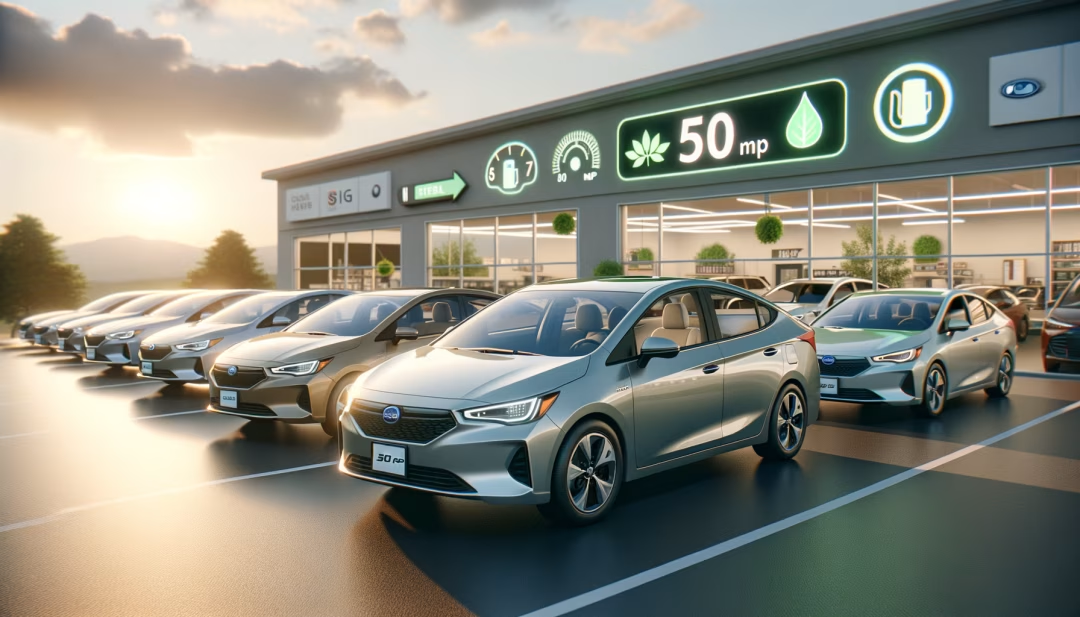
How we define used cars with best fuel economy
Fuel economy is commonly shown as EPA city, highway, and combined mpg. Combined is the most useful single measure for mixed driving. For plug in hybrids and electric vehicles, MPGe represents energy efficiency, but total cost of ownership also depends on your local electricity prices and charging access. Real world mpg varies with speed, temperature, payload, tire type and pressure, and how frequently you accelerate or idle. To evaluate any used vehicle for efficiency, compare EPA estimates to independent road tests and owner reviews, then consider your route profile. Stop and go urban driving favors hybrids. Long highway commutes favor aerodynamic sedans with efficient engines and taller gear ratios. All wheel drive often reduces mpg compared to front wheel drive, and larger wheels with performance tires can reduce efficiency compared to smaller wheels with low rolling resistance tires.
Standout efficient used vehicles by category
Below are categories and widely respected models known for excellent mpg, value, and everyday reliability. Actual availability varies by market and model year. Review maintenance records and inspect tires and brakes to confirm a car can still deliver top tier efficiency.
- Gas compact cars: Toyota Corolla, Honda Civic, Hyundai Elantra, Mazda3. Many trims reach mid to high 30s mpg combined in recent years.
- Hybrids for maximum mpg: Toyota Prius and Prius Prime, Hyundai Ioniq Hybrid, Honda Insight. These often deliver 45 to 55 mpg combined depending on year and trim.
- Midsize hybrid sedans: Toyota Camry Hybrid, Honda Accord Hybrid, Hyundai Sonata Hybrid. Expect 40 to 50 mpg combined in many late model years with spacious cabins.
- Small SUVs with great mpg: Toyota RAV4 Hybrid, Honda CR V Hybrid, Ford Escape Hybrid, Kia Niro Hybrid. Crossovers can deliver high 30s to low 40s mpg combined while offering cargo flexibility.
- Plug in hybrids: Toyota RAV4 Prime, Toyota Prius Prime, Honda Clarity Plug In Hybrid, Ford Escape Plug In Hybrid. Daily charging can slash gasoline use for short commutes.
- Efficient non hybrid sedans: Nissan Sentra, Chevrolet Cruze Diesel in select years, Volkswagen Jetta TSI. Seek well maintained examples with stock wheel and tire sizes.
If you are considering fully electric options, review range, charging speed, and cold weather performance in addition to MPGe. Explore related insights at best-used-electric-vehicles and hybrid focused picks at best-used-hybrid-cars.
Features and options that influence mpg
Two cars with the same model name can return very different fuel economy depending on drivetrain, wheel size, and equipment. When you compare listings, confirm each of the following details before you estimate real fuel cost.
- Drivetrain: Front wheel drive is usually more efficient than all wheel drive. If you do not need traction for snow or gravel, FWD saves fuel.
- Transmission: Many hybrids use eCVT systems tuned for efficiency. For gas engines, CVT or a modern multi speed automatic can improve mpg versus older gearboxes when properly maintained.
- Wheels and tires: Smaller wheels with low rolling resistance tires can add 1 to 3 mpg. Oversized wheels and aggressive tread reduce efficiency.
- Drive modes: Eco and Normal modes adjust throttle sensitivity, shift mapping, and climate control load for better mpg during daily driving.
- Aerodynamics: Roof racks, crossbars, and cargo boxes add drag and can reduce highway mpg. Remove add ons when you are not using them.
Model years that balance mpg, reliability, and value
For many shoppers, three to six year old vehicles strike a strong value with modern safety technology and efficient powertrains, while avoiding the steepest early depreciation. For example, a Toyota Prius from recent generations maintains excellent mpg and often shows long battery life when serviced on schedule. A Honda Accord Hybrid or Toyota Camry Hybrid from the last five to seven model years typically provides 40 plus mpg combined, advanced driver assistance, and roomy cabins that are ideal for commuting families. Compact sedans like Hyundai Elantra or Toyota Corolla from recent model cycles often deliver mid to high 30s mpg combined with low ownership costs.
If your budget is tighter, explore dependable older hybrids with documented service history, or efficient compacts known for low repair costs. Visit best-used-cars-with-good-gas-mileage, best-used-cars-under-15000, and most-reliable-used-cars-under-15000 for more curated picks by price and mpg.
How to verify real world mpg before you buy
EPA labels are a helpful starting point, but two used cars with the same rating can perform differently due to wear, maintenance, or tires. Confirm the following during your research and in person review.
- Service records: Look for documented oil changes, transmission fluid service when applicable, hybrid cooling system maintenance, and timely spark plug or air filter replacement.
- Tires: Check brand, tread depth, and tire type. Low rolling resistance tires and proper inflation help deliver rated mpg. Mismatched or oversized tires can reduce efficiency.
- Software and recalls: Ensure powertrain or hybrid system updates have been applied. Review recall completion on the vehicle history report.
- Road test: Note engine rpm during cruising, transmission shift behavior, and stop start functionality. A properly working system should enable smooth, low rpm operation.
You can expand your research with educational guides like how-to-buy-a-used-car, used-car-buying-checklist, and used-car-warranty-guide. When you compare total cost, consider fuel, insurance, maintenance, and value retention. Explore used-cars-with-lowest-cost-of-ownership and used-cars-with-best-resale-value to see how efficient models can further lower lifetime expense.
Driving habits that boost mpg immediately
Efficient vehicles reward smooth driving. Even without changing cars, the following habits often add several mpg to your average and reduce wear on brakes and tires.
- Maintain steady speeds and anticipate traffic to minimize hard braking and rapid acceleration.
- Use Eco mode in town. On the highway, set adaptive cruise control when conditions allow safe following distances.
- Keep tires inflated to the recommended PSI and rotate on schedule to reduce rolling resistance.
- Remove roof racks, cargo boxes, and heavy items from the trunk when not needed to cut aerodynamic drag and weight.
Compare and shortlist efficiently
Use filters to focus on mpg, drivetrain, body style, and price. Start with efficient categories, then examine trims. For example, a Honda Civic with the 1.5L turbo and CVT can outperform a larger engine trim, while a Corolla with an LE Eco package may return higher highway mpg than a sport trim with larger wheels. When you are ready to evaluate specific vehicles, browse used-inventory. If a vehicle you like was recently sold, check sold-inventory to see similar trims and years that move quickly.
Budget planning for high mpg vehicles
An efficient used car can reduce monthly fuel costs, which may free budget for maintenance or faster payoff. To estimate the best payment structure for your situation, review finance resources like applications, payment-options, and how-does-used-car-financing-work. If you have a trade, use value-my-trade for a current estimate, and read used-car-trade-in-guide to understand how condition, mileage, and options affect value.
SUVs and trucks that still sip fuel
If you need extra space or capability, consider models engineered for efficiency. Hybrid crossovers like Toyota RAV4 Hybrid and Ford Escape Hybrid provide excellent city mpg for families and commuters. Efficient small SUVs are compared at used-suvs-with-best-fuel-economy, while gas saving pickups are featured at used-trucks-with-best-fuel-economy. For road trip comfort with strong mpg, explore best-used-cars-for-road-trips and best-used-commuter-cars.
Ownership, service, and long term efficiency
Keeping an efficient vehicle performing like new requires routine service. Follow the manufacturer schedule for oil changes, coolant and transmission fluid where applicable, hybrid system checks, and brake service. Because hybrids capture braking energy, pads can last longer, but the system still needs inspection. Accurate alignments maintain straight tracking and reduce rolling resistance. Schedule maintenance with schedule-service and learn tips in our blog.
Helpful resources and related pages
- Inventory and research: used-inventory, research-page-template, top-selling-used-cars
- Fuel saving picks: used-cars-with-high-mpg, best-used-cars-with-good-gas-mileage, best-used-commuter-cars
- Budget and approvals: applications, payment-options, how-to-finance-a-used-car
- Trade and test drive: value-my-trade, schedule-a-test-drive
- Company info and policies: home, about-us, contact-us, privacy-policy, terms, visitor-agreement
Frequently asked questions about used cars with best fuel economy
Fuel economy estimates mentioned above are based on typical EPA ratings by model year and may vary. Always confirm ratings for the exact vehicle configuration and verify condition through inspection and a review of maintenance records.
Office Hours
Monday
Tuesday
Wednesday
Thursday
Friday
Saturday
9:00 am - 5:00 pm
9:00 am - 5:00 pm
9:00 am - 5:00 pm
9:00 am - 5:00 pm
9:00 am - 5:00 pm
Closed
