
Best Resale Values
Used Cars With Best Resale Values
Shopping for used cars with best resale values is a smart way to protect your budget today and tomorrow. Vehicles that hold their value tend to be the most reliable, easiest to maintain, and strongest at the time you decide to trade or sell. Our team tracks real time market trends, compares model histories, and studies ownership costs so you can focus on great choices that retain value. From durable trucks and adventure ready SUVs to efficient sedans and hybrids, this guide highlights what to look for and why it matters.
Use this page as your practical roadmap to value retention, with data driven insights, model shortlists, and expert tips to help you buy with confidence. Ready to explore live options and compare pricing history, features, and mileage? Start with our curated research resources, browse current stock, and learn how to estimate future resale.
Helpful resources: used-inventory, blog, research-page-template, value-my-trade.
Not all value holding cars are the same. The best picks balance low depreciation with strong reliability, affordable upkeep, and broad buyer demand. In this guide, you will find the models that consistently lead value retention, the trims and options worth prioritizing, and tips to verify history and maintenance before you buy. You will also learn how financing choices, ownership habits, and service planning can further protect your long term resale outlook.
Explore related insights: used-car-depreciation-guide, how-to-value-a-used-car, used-car-ownership-cost-analysis.
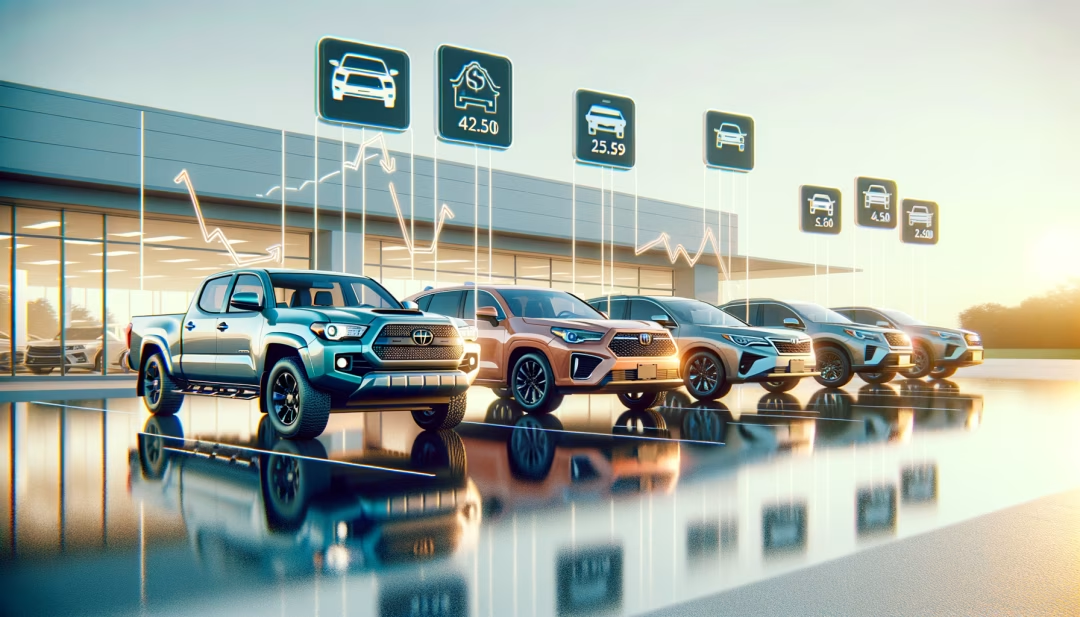
What resale value means and why it matters
Resale value is the estimated price your vehicle will return in the future when you sell it or trade it. On average, vehicles lose the most value in the first few years, then the rate of depreciation slows. Choosing models known for steady demand, durable mechanicals, and lower ownership costs can significantly narrow that early drop and preserve more equity over time. A higher resale value often aligns with strong reliability records, better safety ratings, and higher owner satisfaction, reducing the chance of costly surprises and helping you recoup more when you change vehicles.
Brands and models that tend to hold value
While market conditions shift, certain brands and model lines have a long history of value retention thanks to durability, reputation, and broad appeal. Many shoppers find strong results among Toyota, Honda, Subaru, Lexus, and select trucks from Ford, Chevrolet, Ram, and Toyota. Among SUVs and crossovers, Toyota 4Runner, Toyota RAV4, Honda CR V, Subaru Forester, and Jeep Wrangler have shown enduring demand. Popular cars such as Toyota Camry, Toyota Corolla, Honda Civic, and Mazda3 also hold well when well maintained. Trucks like Toyota Tacoma, Toyota Tundra, Ford F 150, and Chevrolet Silverado remain sought after, particularly in practical trims with towing and payload features. Among hybrids, Toyota Prius and key Toyota hybrid SUVs have historically performed well. In the electric space, demand can vary with incentives and battery trends, but high visibility models with good range and strong charging support tend to lead their category.
For deeper model research by category, visit: best-used-suvs, best-used-sedans, best-used-trucks, best-used-hybrid-cars, and best-used-electric-vehicles.
Key factors that support strong resale
- Proven reliability and low repair frequency across multiple model years
- Affordable parts and routine maintenance with widespread service support
- High demand body styles such as midsize SUVs, compact crossovers, and light duty trucks
- Desirable features like advanced driver aids, all wheel drive in winter regions, and practical towing options
- Clean history reports, one owner records, and complete service documentation
Trim, mileage, and options sweet spots
Resale leaders are often the trims that balance value with everyday convenience. Mid level trims that include safety tech and comfort features tend to resell more easily than stripped base models or high cost luxury packages. For mileage, buyers often prefer vehicles that average 10,000 to 12,000 miles per year or less, supported by service records. Options that add real world utility, such as all wheel drive where weather requires it, adaptive safety systems, or a tow package on a truck, usually help value. Extra cost appearance packages or niche options rarely return their full price at resale. Neutral exterior colors like white, gray, black, and silver appeal to the widest audience and can support stronger resale outcomes compared with unusual colors in many segments.
How to verify value before you buy
Verifying a vehicle’s value story starts with its history and condition. Review the history report for accidents, title status, open recalls, and consistent mileage. Inspect service records, look for evidence of regular fluid changes, and check wear items. A pre purchase inspection can identify issues that affect price and future value. Compare pricing to recent local sales or recently sold inventory to see how similar vehicles are trading in your area. When in doubt, review depreciation patterns for the model and consider future demand drivers such as safety ratings, fuel economy, and ownership costs.
Helpful guides: how-to-check-used-car-history, used-car-vin-check-guide, used-cars-with-best-crash-test-ratings, used-cars-with-high-mpg, and sold-inventory.
Certified pre owned vs traditional used
Certified pre owned programs can support resale value by adding inspection standards, warranty coverage, and roadside assistance during your ownership window. These benefits often make a CPO vehicle easier to sell later. However, not every buyer will pay a premium at resale for a package that has expired. If a CPO vehicle is within your budget and includes meaningful coverage time for you, it can be a valuable way to reduce risk and preserve buyer appeal. If you are focused primarily on lowest total cost, a well maintained non CPO example with records may offer better net value. Learn more here: certified-pre-owned-vs-used and used-vehicles-with-best-warranty-coverage.
Budget friendly picks with strong value retention
Value holding options exist across budgets. In entry level price bands, look for simple, dependable models with mature powertrains and low service costs. In mid price ranges, focus on compact and midsize SUVs and well known sedans with high consumer ratings. In higher price brackets, lean toward brands and trims with a track record of reliability and strong owner loyalty. Use these pages to explore choices by price and reliability:
Lifestyle picks that keep value
The best resale vehicles match everyday needs. For families, three row SUVs with strong safety and easy car seat access can be ideal. Commuters often prefer efficient, quiet, and comfortable sedans or crossovers. Work trucks hold value when properly spec’d for towing and hauling. Off road buyers prize proven 4x4 systems and durable suspensions. Narrow your search with these tailored guides:
Financing, resale, and total cost
Financing affects your total cost and your equity position. Favor shorter terms when possible to reduce interest and help equity keep pace with depreciation. A reasonable down payment and competitive interest rate can prevent negative equity. Choose models known for value retention so your principal reduction aligns with a slower depreciation curve. For guidance, review: how-to-finance-a-used-car, used-car-loan-interest-rates, payment-options, and applications.
Ownership habits that protect your future value
- Follow the maintenance schedule, save receipts, and log services in a folder
- Store the vehicle in a garage when possible and keep it clean to prevent wear
- Avoid heavy aftermarket modifications that narrow buyer demand later
- Fix small issues early to prevent larger repairs and value losses
- Choose quality tires and keep them rotated and aligned for consistent wear
Need long term service planning help? See schedule-service and explore used-cars-with-lowest-maintenance-costs.
Trade in strategy and market timing
Resale value is also about timing and presentation. Monitor local supply, price trends, and seasonality for your segment. Trucks and SUVs may attract stronger pricing in certain seasons. Keep a well organized service record to present at trade time and consider reconditioning small cosmetic items. Use accurate valuation tools and recent comparable sales to set expectations. Learn more here: used-car-price-trends, used-car-market-trends, how-to-value-a-used-car, used-car-trade-in-guide, and value-my-trade.
Research next steps
Start by shortlisting models from brands with strong value retention and proven reliability. Cross check features you need, review accident and service history, and compare asking prices to recent local sales. Evaluate financing terms alongside projected depreciation to understand true total cost. When you are ready, browse current options and review comparable sold vehicles to validate pricing and demand for your picks.
Continue exploring: used-cars-with-highest-resale-value, used-cars-with-best-value-retention, most-reliable-used-cars, used-inventory, and sold-inventory. For company information and policies, visit about-us, privacy-policy, terms, and visitor-agreement. Have questions for our team or want to share feedback? See contact-us and customer-survey.
Frequently Asked Questions About Resale Value
Helpful links
- Explore inventory: used-inventory
- Check value trends: used-car-price-trends
- Estimate trade value: value-my-trade
- Read more on ownership costs: used-cars-with-lowest-cost-of-ownership
- Company info: about-us and contact-us
Office Hours
Monday
Tuesday
Wednesday
Thursday
Friday
Saturday
9:00 am - 5:00 pm
9:00 am - 5:00 pm
9:00 am - 5:00 pm
9:00 am - 5:00 pm
9:00 am - 5:00 pm
Closed
